
How Much Fiber You Should Eat and Why It Matters for Your Health
Dietary fiber might sound boring, but it’s your gut’s best friend and the unsung hero of feeling full and satisfied. But striking the right balance of how much fiber you should have in a day can be complicated. Jeanna Brouwer, dietitian at OSF HealthCare Cancer Institute, helps untangle the fiber facts so you can find the right balance for your body without the guesswork.
What is fiber?
Dietary fiber is the part of plant foods your body can’t fully digest. Instead of being broken down and absorbed, it moves through your digestive system, helping support digestion, heart health and fullness after meals.
There are two main types of fiber and both play important roles. Soluble fiber dissolves in water and can help lower your cholesterol and keep your blood sugar levels steady. Insoluble fiber doesn’t dissolve in water. Instead, it helps food move more easily through your digestive tract and keeps bowel movements regular.
How much fiber do you need?
How much fiber you need depends on your gender and age. Most women should aim for about 25 grams of fiber per day, while men typically need about 38 grams of fiber per day.
“The key is to increase fiber gradually, drink plenty of water and get fiber naturally from a mix of fruits, vegetables, beans and whole grains,” says Jeanna. “This helps your digestive system adjust while letting you enjoy the benefits of a fiber-rich diet.”
High Fiber Foods to Add to Your Diet
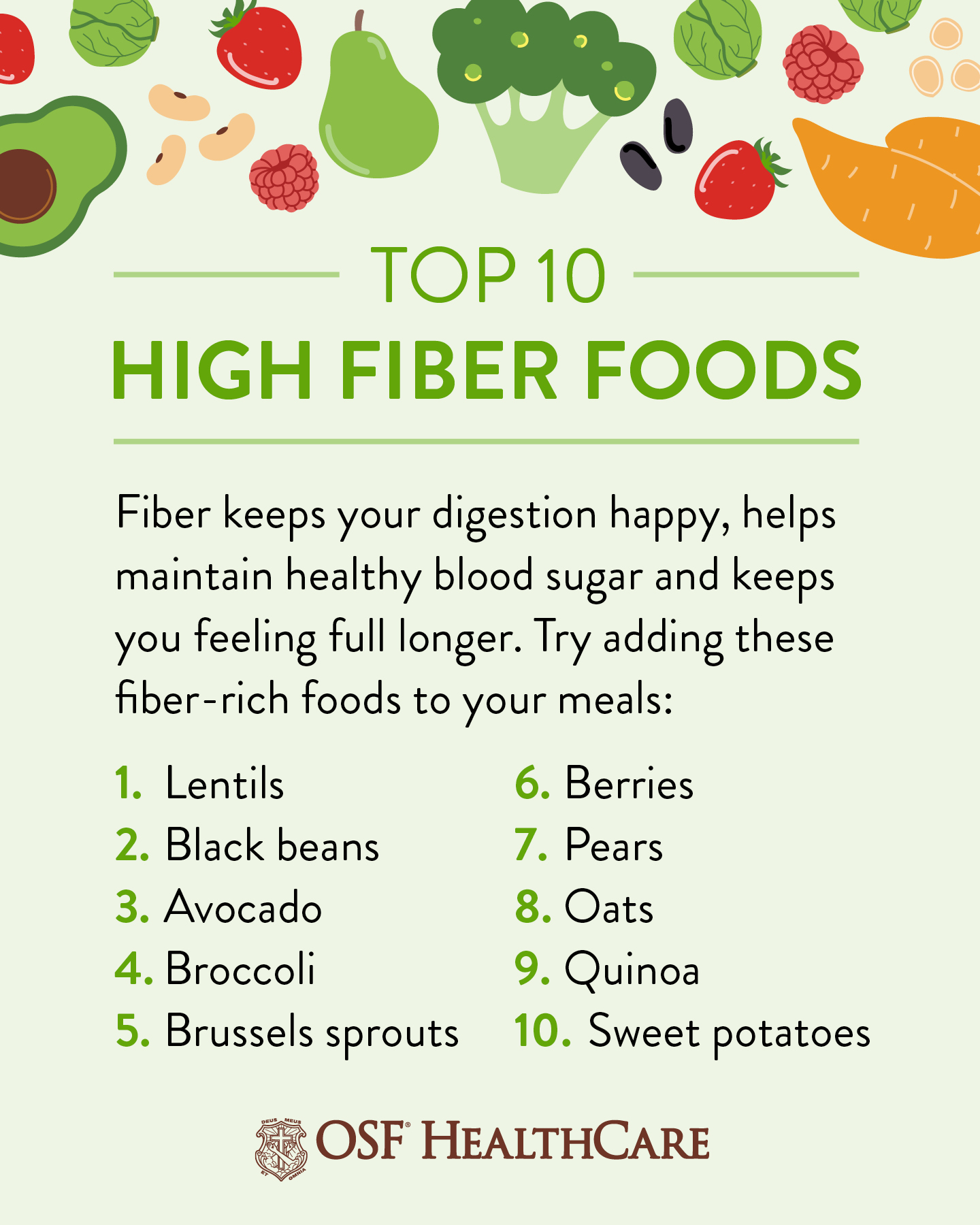
The American Society for Nutrition (ASN) reports only 5% of men and 9% of women are getting the recommended daily amount of dietary fiber.
The good news? There are plenty of fiber-rich healthy foods that are easy to work into your day. Building meals around a variety of high fiber foods not only supports digestion but also helps you feel full and satisfied.
Vegetables are a great place to start. Broccoli, Brussels sprouts, carrots, sweet potatoes with skin, spinach, kale and other leafy greens are all excellent sources of fiber.
Fruits can also pack a big fiber punch, especially apples with skin, raspberries, blackberries, pears and oranges. Bananas are high in fiber as well and can be an easy addition to snacks or breakfast.
Legumes are true fiber powerhouses. Lentils, black beans, chickpeas, kidney beans and split peas can easily be added to soups, salads or main dishes.
Whole grains also boost your fiber intake. Think oats, brown rice, quinoa, whole wheat bread, pasta and barley.
Don’t forget nuts and seeds. Almonds, walnuts, pistachios, chia seeds, flaxseeds and sunflower seeds are simple ways to add fiber throughout the day.
“Mixing different foods and vegetables high in fiber throughout the day helps you get the benefits without getting bored,” said Jeanna. “Try adding a fruit to breakfast, swapping in whole grains, and including beans or veggies at lunch and dinner. Over time, it naturally builds a fiber-rich diet.”
Find your fiber fit
Fiber Supplements and Alternatives
Sometimes it’s tricky to get enough fiber from food alone, and that’s where a fiber supplement can help. Whether you’re busy or just need a little extra boost, supplements can be an easy way to reach your daily fiber goal.
Fiber supplements come in many different types including fiber gummies, which can be a convenient option for adults and kids. Just be mindful, as some may cause gas or bloating.
Fiber supplement powders can be mixed into water, smoothies or yogurt. Fiber capsules can be quick and easy to take on-the-go.
“Fiber supplements can be helpful, but the real benefits come from pairing them with a variety of fiber-rich fruits, vegetables, whole grains, legumes, nuts and seeds,” said Jeanna. “They should be used to complement high fiber foods, not replace them entirely.”
Fiber and Health Benefits
Fiber plays a key role in keeping your digestion on track. It helps move food through your digestive system and adds bulk to your stool, making it easier to pass. This can help prevent uncomfortable issues like constipation and hemorrhoids.
And the benefits don’t stop there. The right amount of fiber can support heart health, keep your blood sugar steady and even help with weight management by keeping you feeling full longer.
In other words, getting the right amount of fiber in your day is good for your whole body, not just your gut.
How Much Fiber is Too Much Fiber
Fiber is great for your health, but like anything, too much too fast can cause problems. Too much fiber can cause constipation and even diarrhea, especially if your body isn’t used to it.
Here’s how to keep things balanced:
- Increase fiber gradually. Add a little at a time so your digestive system can adjust.
- Stay hydrated. Fiber works best when you’re drinking plenty of water.
- Watch for warning signs. Bloating, gas, constipation or diarrhea are signals you might be adding fiber too quickly or getting too much of it.
By easing fiber into your diet and pairing it with enough fluids, you can enjoy all the benefits without the discomfort.