
Is your kid’s cough more than just a cough?
Few things keep parents on edge like a cough that won’t quit. Some coughs in kids start as tiny throat tickles. Others come with congestion, fever or nighttime flare-ups that leave everyone exhausted. So how do you know when a cough is “just a cough” and when it’s time to call your pediatrician?
Keith Hanson, MD, pediatric hospitalist at OSF HealthCare Children’s Hospital of Illinois, helps break down the different types of coughs in children and the signs that mean your child may need medical attention.
Wet vs. Dry: What Your Child’s Cough Can Tell You
Understanding the difference between a wet cough and dry cough in kids can help you better describe your child’s symptoms and get the right care sooner.
Wet Cough in Kids
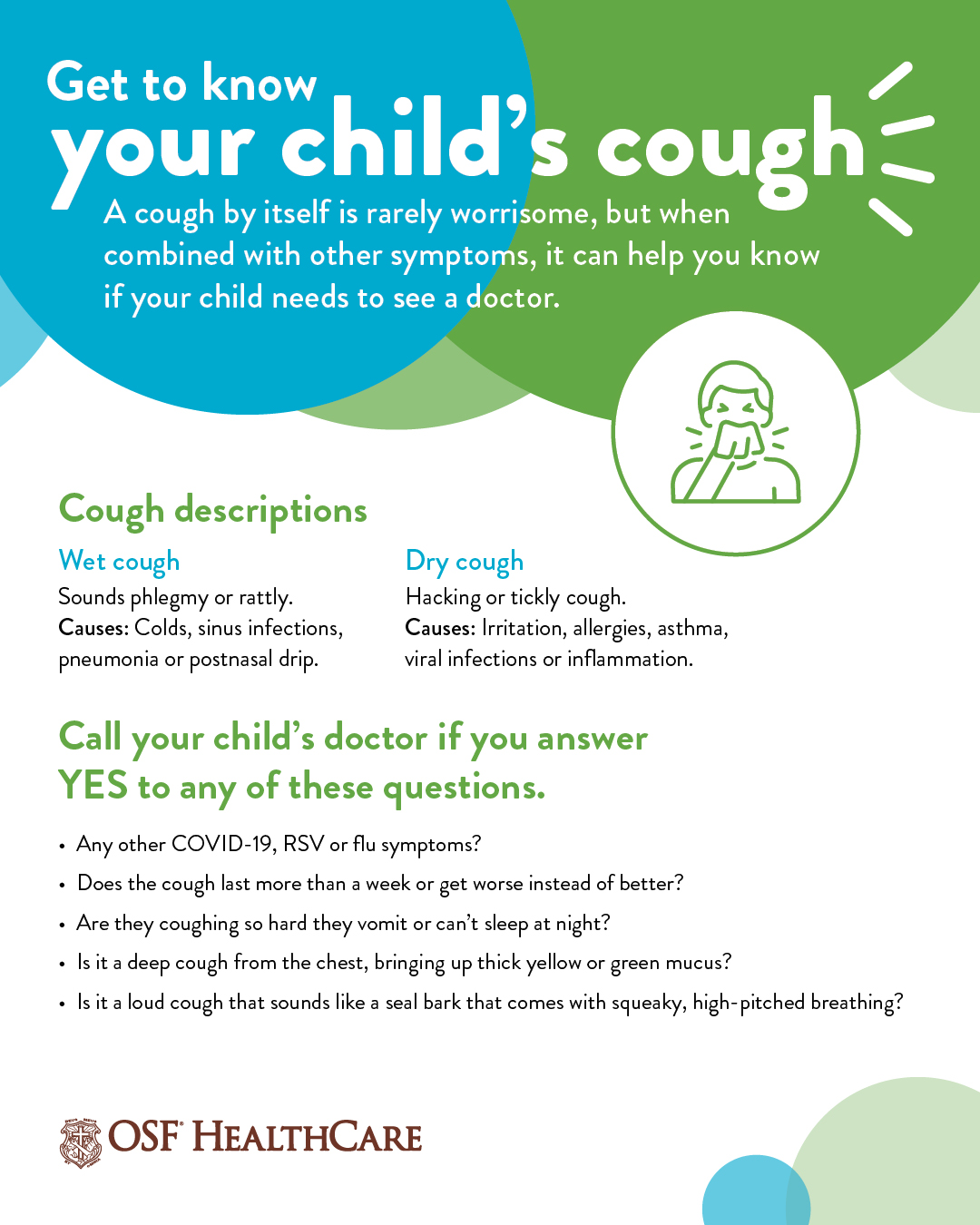
A wet cough sounds phlegmy or rattly. Your child may cough up mucus, or you may hear it moving in their chest. Common causes of wet coughs usually include colds, sinus infections, pneumonia or postnasal drip.
Dry Cough in Kids
A dry cough is more of a “hacking” or tickly cough with no mucus. Common causes of dry coughs include irritation, allergies, asthma, viral infections or lingering airway inflammation.
Get trusted care for every cough
When to Treat Your Child’s Cough at Home
If your child is coughing but still playing, eating and breathing comfortably, the cough may just need time and fluids to improve. Many kids also get a persistent cough with no fever after they’ve had a cold or other respiratory illness. This is normal and can last up to a week or more.
“A cough by itself is usually not worrisome,” Dr. Hanson said. “The other symptoms that show up with it, or how your child looks and feels, matter a lot more.”
It’s also very common for a child’s cough to worsen at night while they are sleeping.
How to Stop Your Child’s Constant Nighttime Cough
Nighttime coughs in babies or toddlers are common because postnasal drip increases when lying down. Here are a few ways you can try to stop these constant nighttime coughs for your child:
- Run a cool-mist humidifier to keep the air moist
- Offer warm drinks before bed like tea or warm water
- Use saline throat spray or let your child gargle with salt water
- Elevate the head of their bed slightly to make breathing easier
“Persistent coughs in the middle of the night can feel unbearable for the whole family,” Dr. Hanson said. “Try to stay positive and remember that most coughs get better with time, rest and simple home care.”
Is cough medicine safe for kids?
Not all cough remedies are safe or effective for kids. Here’s what you should know:
- Over-the-counter cough suppressants are not recommended for kids under age 6.
- Cough drops can be choking hazards for children under age 4.
- A spoonful of honey can work well as a natural cough soother, but only for children over 1 year, as it can be dangerous for babies under that age.
- A medication that contains an expectorant for kids should only be used if your doctor recommends it.
When to See a Doctor for Your Child’s Cough
Most coughs are harmless, but sometimes they can signal something more serious. Call your child’s pediatrician if you notice any of the following:
- Symptoms that could point to COVID-19, RSV or flu, such as fever, fatigue, sore throat or trouble breathing
- Cough that lasts more than a week, or is getting worse instead of better
- Deep, chesty cough with thick yellow or green mucus
- A cough that sounds like barking or comes with a squeaky, high-pitched breath
- Coughing so hard that your child vomits
- A cough that disrupts sleep every night
- Breathing that looks fast, noisy or difficult
- Chest pain when coughing
- Signs of dehydration, such as dry lips and fewer wet diapers or peeing less often
- Any cough in a baby under 3 months
It’s common for newborns to make congested or unusual breathing sounds, even when they aren’t sick. However, plan to call your pediatrician if you notice your baby:
- Making phlegm-like breathing sounds even when not congested
- Coughing repeatedly during sleep
- Having trouble settling or staying comfortable while coughing in sleep
- Breathing fast or with noticeable effort
- Struggling with feeding or eating less breast milk or formula than usual
“Trust your instincts,” Dr. Hanson said. “Parents usually know when something isn’t right.”