What to Do if You Think You Have COVID-19
You’ve got that sneaky cough, tender muscles and fatigue that hits out of nowhere. Could it be COVID-19? Don’t panic. Here’s an easy, up-to-date guide to help you know when to test for COVID-19, how to treat symptoms at home and when it’s safe to return to work or school.
What to Do If You Have COVID-19 Symptoms
If you’ve been exposed to COVID-19 or you’re starting to feel sick, there are a couple easy ways to get tested. At-home rapid tests are widely available, fast and reliable for most people. If you’d rather have a test done in person, most doctor’s offices and urgent care clinics offer PCR tests, which are the most accurate option.
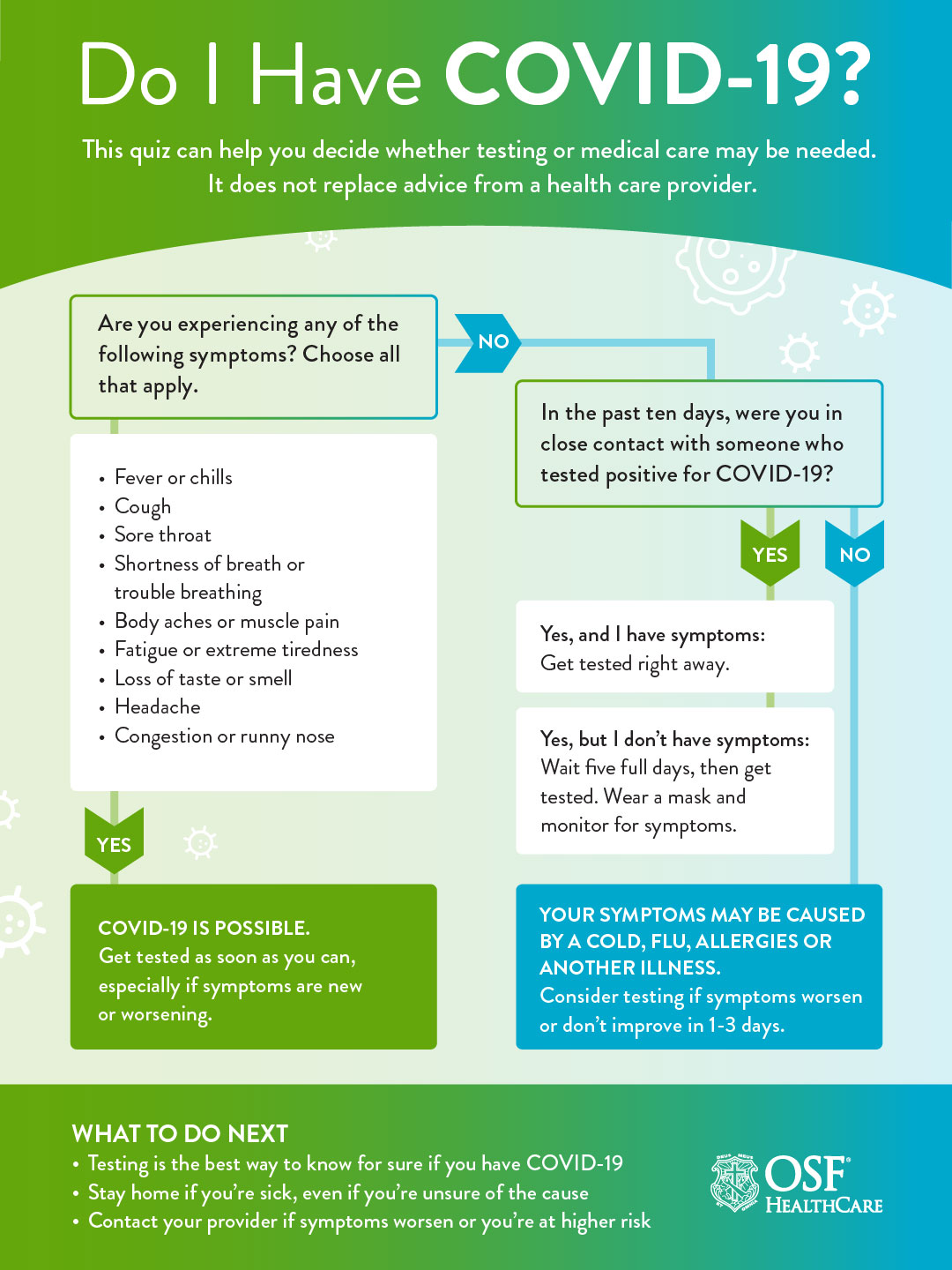
Take the COVID-19 Symptom Quiz
Sometimes COVID-19 symptoms can feel like a cold, flu or allergies. If you’re unsure what your symptoms might mean, try our quick COVID-19 Symptom Quiz. It’s a simple way to get guidance on whether your symptoms line up with COVID-19 or another common illness.
Get connected to the care you need
When is the best time to test for COVID-19?
If you have been exposed to COVID-19, but don’t have symptoms, you should wait at least five full days before you take a test. COVID-19 symptoms can start anywhere from two to 14 days after exposure.
If you do have COVID-19 symptoms, you can take a test right away.
What to Do If You Test Positive for COVID-19
Testing positive for COVID-19 can be stressful, but acting quickly helps protect your health and the people around you. Here’s what to do next:
- Call your doctor’s office. They can advise you on treatment options and next steps.
- Let close contacts know you’ve tested positive so they can monitor for symptoms and take precautions. This includes anyone you were around in the 48 hours before your symptoms started.
- Follow current CDC isolation guidance. This includes staying home until you’ve been fever-free and symptom-free for 24 hours and wearing a mask around others during isolation and for five days after that.
- During isolation, take precautions to prevent spreading the virus. Avoid sharing household items like towels or blankets and consider asking a friend or family member to help with groceries, medications or supplies so you don’t have to leave home. If you have to leave the house, wear a mask and try to avoid close contact with others.
Home Treatment for COVID-19
Most cases of COVID-19 get better on their own, but there are things you can do to recover faster and feel more comfortable:
- Stay hydrated with water, broth or electrolyte drinks
• Get plenty of rest
• Use over-the-counter medication like acetaminophen or ibuprofen for fever or aches
• Use a humidifier to ease cough and congestion
• Wash your hands often to avoid reinfection or spreading the virus
What to Do for Worsening Symptoms
If your symptoms are getting worse, contact your health care provider. They may prescribe a COVID-19 antiviral medication to treat you, such as Paxlovid. These medications work best when started within the first five days of symptoms, so it’s important to reach out to your provider early. These medications can significantly reduce the risk of hospitalization and severe illness, but they do require a prescription and aren’t right for everyone. Talk to your doctor about whether COVID-19 antiviral medication is right for you.
Even if your symptoms feel mild, contacting your provider early can help you find out whether a prescription treatment could help you recover faster.
How long are you contagious with COVID-19?
You are most contagious with COVID-19 during the first five days following the start of your symptoms. You can also spread COVID-19 in the 48 hours before your symptoms start.
If you test positive but never develop symptoms, you’re considered most contagious for the five days following your positive test. And while many people stop being contagious after this period, some may continue to spread the virus for up to ten days.
How long until you recover from COVID-19?
Most people recover from COVID-19 within about a week, but the timeline can look different for everyone. Children generally experience mild symptoms that resolve more quickly than in adults.
Mild illness typically clears up within three to seven days, while moderate cases may take up to ten days. Some symptoms, especially fatigue and cough, can linger for weeks even as you start to feel better.
If symptoms last for four weeks or more, you may have long COVID-19 (link).
Can you get COVID-19 more than once?
Yes, in fact, reinfections are fairly common, especially when new variants are circulating. Even if you’ve had COVID-19 before or you’re vaccinated, it’s still possible to get it again. The key to avoiding getting COVID-19 again or serious symptoms is to stay up to date with COVID-19 vaccines. Getting care as soon as symptoms develop also decreases the risk of becoming seriously ill.
When to Call Your Doctor
Most people recover from COVID-19 at home. There are times when you should contact your doctor, including if you have:
- Symptoms that last more than a week
- Fever that comes back or won’t go away
- Cough that gets worse or shortness of breath
- Signs of dehydration, like dry lips or peeing less often
- Severe fatigue
Some symptoms require urgent attention. Seek emergency care right away if you have trouble breathing, chest pain, severe dizziness, confusion or if your lips or nails start to turn blue.
COVID-19 Return-to-Work Guidelines
Return-to-work guidelines can vary depending on your employer, local health department or workplace setting, so always check the guidance specific to your organization. In general, you can return to work once you have been fever-free and symptom-free for at least 24 hours without fever-reducing medication, and your symptoms are steadily improving.
After returning, consider taking precautions like wearing a high-quality mask for ten days, avoiding close contact with people and staying home if your symptoms worsen again.