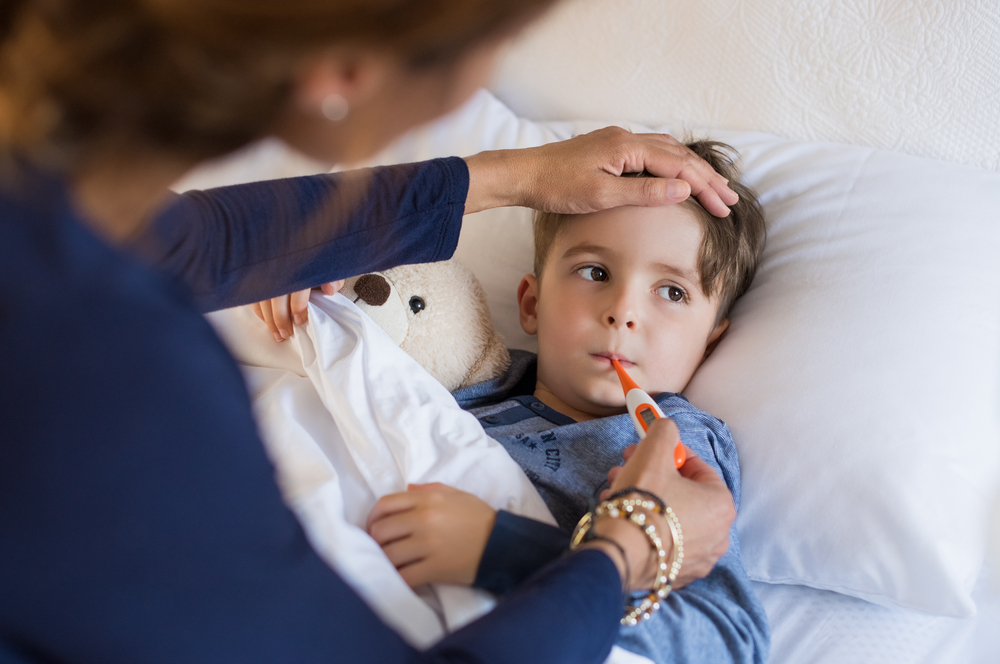
What to Do if Your Child Has the Flu
Flu in kids can look a lot like flu in adults, but children often experience a few unique symptoms that can make the illness hit harder and faster.
Brian Curtis, MD, vice president, chief medical officer, OSF Medical Group, offers guidance on how to recognize flu symptoms in children, how to help them recover safely at home and when it’s time to call the doctor.
How to Tell if Your Child Has the Flu
Winter brings a lot of different respiratory illnesses, and it can be tough to know what’s what.
Flu symptoms in both adults and kids typically hit suddenly, often over the course of a few hours. Other illnesses, like the common cold, progress more gradually, sometimes beginning with a runny nose or congestion.
- While fever, chills and body aches occur in both adults and children, kids are more likely to have:
- Vomiting or diarrhea
- Higher, more sudden fevers
- Severe exhaustion or irritability
- Headaches
If your child suddenly “crashes” with a high fever, is extremely tired or complains of body aches out of nowhere, the flu is a likely culprit.
How long does the flu last in kids?
Most kids recover from the flu within three to seven days, though lingering symptoms like cough and fatigue can last longer. If your child has had their flu shot, they’ll most likely experience milder symptoms and recover more quickly.
Kids can return to school, daycare or activities once they’ve been fever-free for 24 hours without fever-reducing medicines, like acetaminophen.
“Even after the fever is gone, children may still feel wiped out for a few days,” said Dr. Curtis. “Make sure to take your time and let them rest while they gradually return to normal activity.”
Flu Treatment for Kids at Home
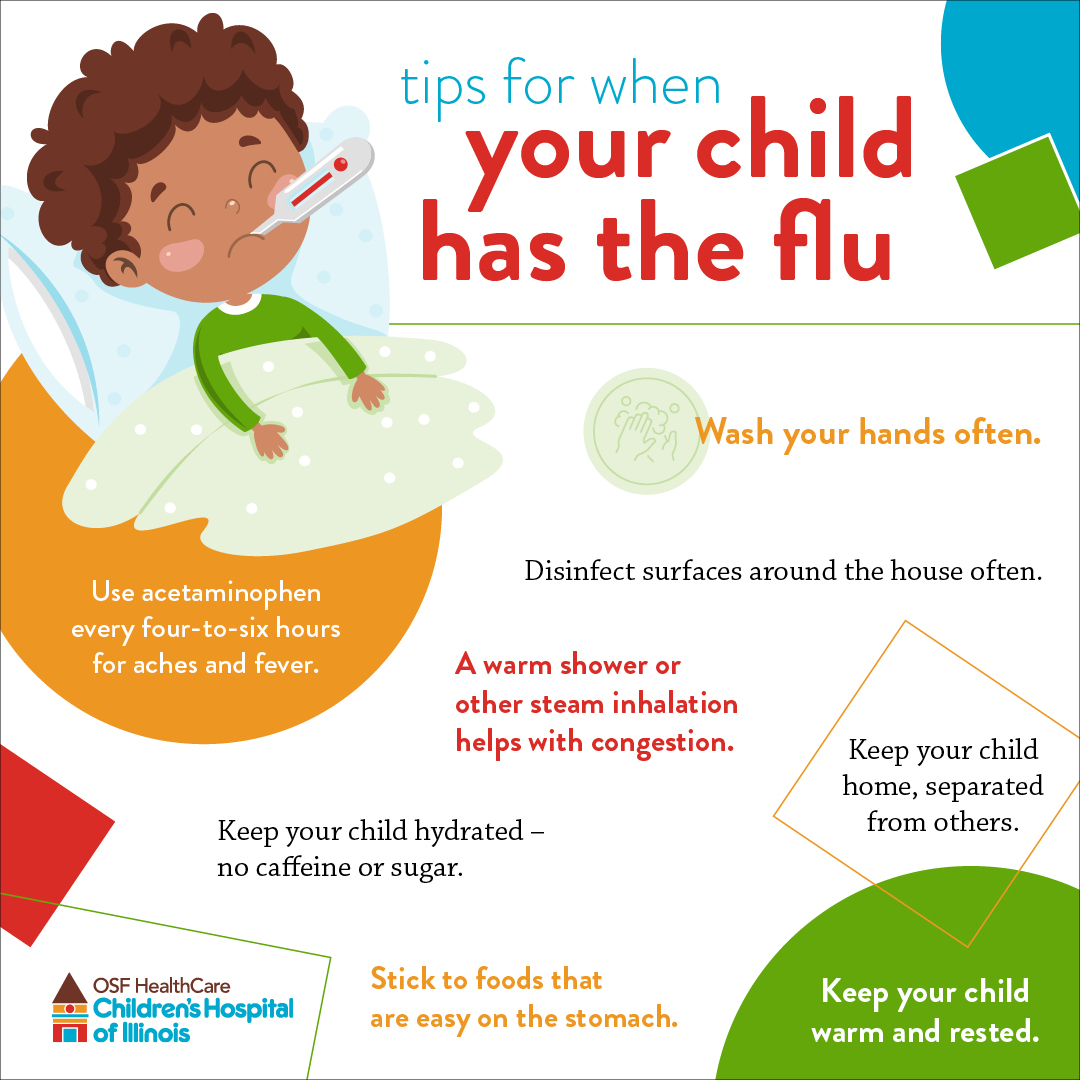
Most childhood flu cases can be managed safely at home with natural flu remedies or over-the-counter medication. Here are a few simple ways to help your child feel better:
- Keep your child home and resting so their body can recover
- Encourage plenty of fluids to prevent dehydration
- Offer easy-to-digest foods like broth, applesauce, toast and bananas
- Use acetaminophen as directed to help with fever and body aches
- Try warm showers or baths with steam to ease congestion
- Use a cool-mist humidifier or saline nasal spray to help with stuffiness
- Give warm liquids or honey (for kids over age 1) to soothe coughing and sore throats
Flu Treatment for Babies and Toddlers
Flu can feel very different for babies and toddlers under 2 years of age. Their immune systems are still developing, which means they can become dehydrated or fatigued more quickly, and symptoms can escalate faster.
Kids under 2 are considered high-risk, so even what seems like a mild flu warrants closer attention. Your pediatrician may recommend antiviral medications like Tamiflu if taken within the first 48 hours of your child’s symptoms.
“Antivirals aren’t always needed, but for young children they can be very helpful in preventing complications,” Dr. Curtis said.
Worries about your child’s flu symptoms?
How to Prevent the Flu
If your child is 6 months or older, one of the easiest ways to keep them from getting knocked down by the flu is their yearly flu shot. While they may still get the flu, kids who have had their flu shot usually feel better faster and don’t get as sick as those who aren’t vaccinated.
When to Call Your Child’s Pediatrician
It can be tricky to know when flu is becoming serious, especially in kids. Call your child’s pediatrician if they have:
- Fever for more than three days
- Difficult or rapid breathing
- Severe or persistent vomiting
- Pain or pressure in the chest
- Symptoms that improve but suddenly return and get worse
- Signs of dehydration, like fewer wet diapers and dry lips
Getting your child checked out early can help rule out complications like pneumonia or worsening asthma, giving you peace of mind and ensuring your child gets the right treatment quickly.