What You Need to Know About Skin Cancer and How to Recognize It
It’s easy to put off checking your skin – until you notice something that just doesn’t look right. Maybe it’s a mole that’s changed, a rough patch that won’t go away or a bump that looks like a skin cancer pimple rather than a normal breakout.
So, what does skin cancer look like? And how can you tell the difference between a harmless change and a serious concern?
Understanding the appearance of skin cancer spots, where they most commonly show up and how they differ from other conditions can help you act early, identify possible melanoma and protect your health.
Concerned about a spot on your skin?
What is skin cancer?
Skin cancer develops when skin cells grow abnormally and form a tumor or lesion.
There are three primary types of skin cancer:
- Basal cell carcinoma – the most common form of skin cancer; typically slow growing
- Squamous cell carcinoma – may look larger and more irritated and form firm, scaly lesions
- Melanoma – less common, but more dangerous because it can spread quickly
If you have seen different types of skin cancer pictures, you’ll notice that the appearance varies from person to person and from one area of the body to another.
“Skin cancers are common, but we sometimes downplay how serious they can be. We have to be cautious,” said James McGee, MD, president, OSF HealthCare Cancer Institute.
What Skin Cancer Looks Like
Skin cancer can appear in many forms. It may be flat or raised, light or dark, smooth or rough, soft or hard. Your provider evaluates several factors to determine whether a spot is cancerous.
Basal Cell Carcinoma
These spots often appear on sun-exposed areas such as the face, nose, eyelid, under the eye and on the scalp.
Common signs of basal cell carcinoma include:
- Pearly, shiny or translucent bump
- Pink or flesh-colored lesion that won’t heal
- Crater-like lesions on skin
- Dry, scaly patches
Squamous Cell Carcinoma
Squamous cell carcinoma (SCC) frequently develops on the arms, hands, ears, lips, legs and ankles.
It may look like:
- Rough or thick scaly patch
- Hard, raised bump
- Spot that bleeds, cracks or becomes tender
- Slow-growing sore
SCC is commonly firm or hard to the touch, while open sores may feel softer or fragile.
 Melanoma
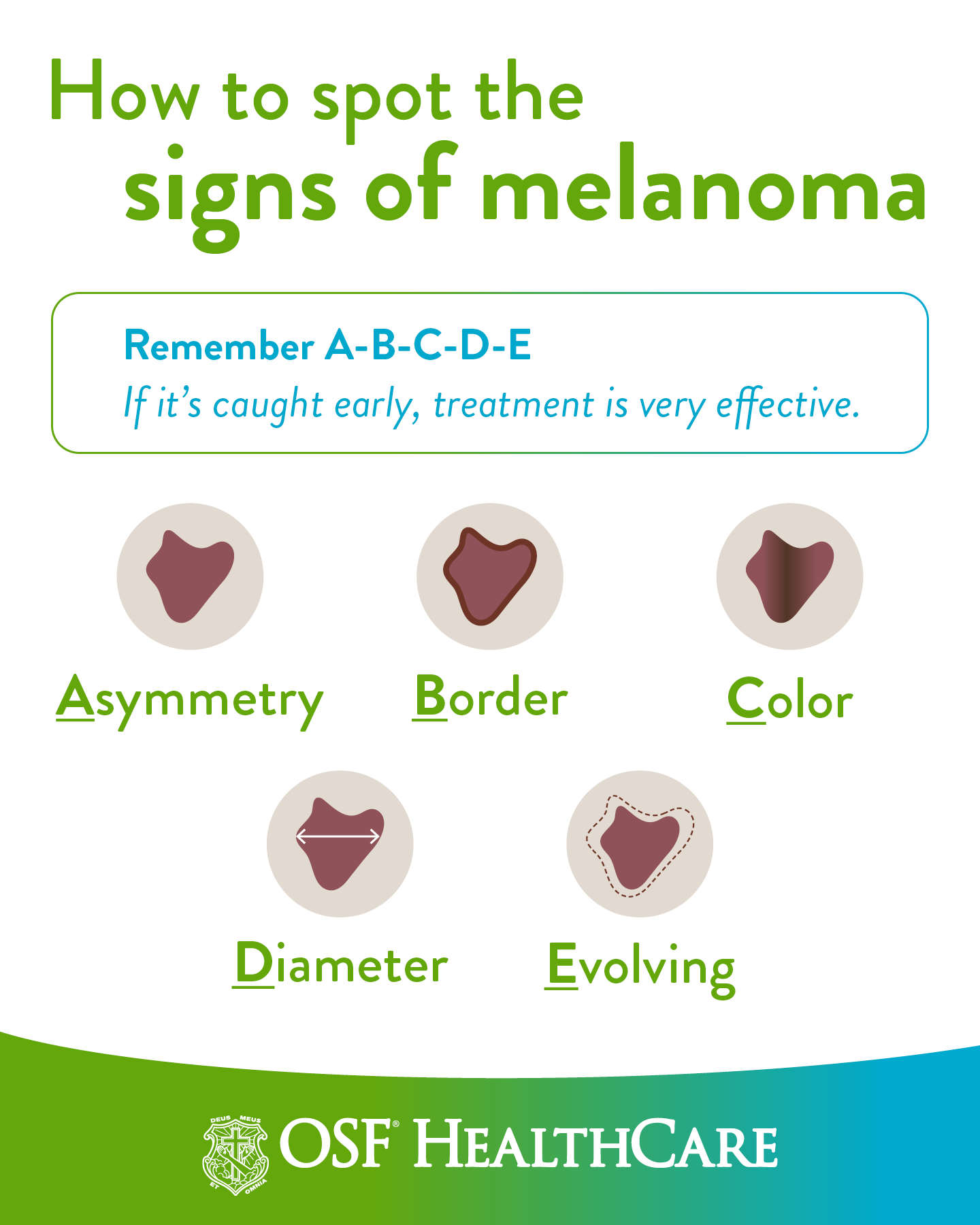
Melanoma’s defining feature is its color variation. These spots may be:
- Black
- Brown
- Red or pink
- Blue or white
- A mix of multiple colors
While green is rare and often related to infection, white or pale areas can be part of color variation in melanoma or other skin cancers.
A key warning sign is size. What diameter indicates melanoma? Freckles, moles, skin tags and other spots larger than six millimeters (about the size of a pencil eraser) are more concerning, especially if they are changing.
Melanoma is the one we worry about most.
“Melanoma can be treacherous,” Dr. McGee said.
Any spot that changes in shape, color or size should be checked.
Common Places Skin Cancer Develops
“Skin cancer can develop in any area where there is skin,” Dr. McGee said. “Typically, around sun-exposed areas. Around the ears, nose, arms. But you can see these cancers anywhere on the skin.”
Sun exposure is a major risk factor, but it is not the only cause, according to Dr. McGee.
“Genetics and background can play a role, as well.”
Skin cancer can appear anywhere on the body, even in areas that don’t typically see a lot of sun, such as the scalp, under the nails or between folds of skin.
Some of the most common skin cancer locations include:
- Face and nose
- Eyelids and under-eye area
- Lips
- Ears
- Scalp
- Arms and hands
- Legs and ankles
- Chest and breasts
While sun exposure increases risk, skin cancer can also develop in areas you might not expect, such as under nails, on the soles of the feet or in skin creases.
Skin Cancer in People with Darker Skin
Black or melanated skin and skin cancer deserves special attention. While overall risk may be lower, it’s not zero. Melanoma in darker skin tones is often found in less obvious locations, including:
- Palms of the hands
- Soles of the feet
- Under the nails
- Ankles or lower legs
These spots may look like dark streaks, patches or small bumps. Because they’re harder to spot, diagnosis sometimes happens later.
Skin Cancer vs. Common Skin Conditions
Many people first notice skin changes and ask whether it is something harmless or serious. Knowing how some of the common skin conditions differ from skin cancer can help you understand which spots to be concerned about.
Wart vs. Skin Cancer
Some skin cancers look wart-like, but unlike typical warts, they tend to:
- Grow steadily
- Bleed or crust
- Feel firm or tender
Persistence is a key difference. A wart may go away on its own or with over-the-counter treatments. A wart-like skin cancer spot will stick around and usually continues to grow.
Rashes and Ring-Shaped Patches
A circular red patch might be mistaken for ringworm or skin cancer. Ringworm usually itches, has a clearer center and responds to antifungal treatment. Skin cancer that looks like a rash doesn’t have those same characteristics.
Pimple-Like Bumps
A skin cancer pimple may:
- Not heal after several weeks
- Bleed easily
- Develop a crater or scab
Unlike regular acne, it does not go away.
Cherry Angiomas
Bright red cherry angiomas are common and benign. They do not turn into cancer, but any red growth that changes quickly should be evaluated.
Skin Tags
Skin tags are soft and move easily between your fingers. Cancerous spots are typically firm and fixed in place.
Birthmarks and Moles
Longstanding birthmarks usually stay the same. If a mole or mark suddenly changes color, develops uneven edges or starts growing, your provider may recommend a closer look.
Psoriasis
Skin cancer vs. psoriasis can be confusing because both can produce thick, scaly patches. Psoriasis usually appears in symmetrical areas and comes and goes, while cancerous patches persist and worsen.
Age Spots and Sun Spots
These flat, brown spots are common with aging. Cancer is more likely when the spot:
- Elevates
- Changes color
- Becomes scaly
- Looks noticeably different than others
Bruise-Like Areas
A bruise fades over days or weeks. A dark patch that doesn’t improve or begins spreading can be a sign of melanoma.
Any spot that behaves differently than the rest of your skin deserves attention.
Texture and Feel: Hard or Soft?
Skin cancer can feel:
- Hard and raised (often SCC)
- Soft or fragile if it ulcerates
- Rough or scaly
- Tender to the touch
Texture alone isn’t a diagnosis, but a change in how it feels is important to note.
When to Get a Skin Spot Checked
It’s time to schedule an evaluation if you notice:
- A spot that grows or changes
- A sore that won’t heal
- A new patch of rough, dry skin
- A mole with changing color patterns
- Any spot that bleeds or crusts
- A lesion that looks different than anything else on your body
Early evaluation and wearing sun protection are the best ways to protect your skin and your health.
“Catching cancer early increases chances that it will be cured. It also reduces the expense of treatment,” Dr. McGee said.
What to Do If You’re Concerned
If something looks or feels off, don’t ignore it. Here’s what can help:
- Take pictures over time to monitor changes
- Share your family history with your doctor
- Ask whether you need a biopsy or routine monitoring
- Follow your care team’s guidance on sun protection and prevention
If something looks new or unusual, it’s always worth getting checked.