Get ready for asthma and allergy ‘Peak Week’
Sweet September is upon us – a time when the summer heat fades and trees begin to surround us with color.
It’s also a time when the air comes alive with the sounds of coughing, sneezing and wheezing.
“It’s a perfect storm of multiple exacerbating factors,” said Patrick Whitten, MD, an interventional pulmonologist at OSF HealthCare Saint Francis Medical Center in Peoria, Illinois. “An asthmatic person’s lung function can vary, depending on what’s going on in their life. Stress, environment, weather, infections – all of these factors play a role.
“And it seems the third week of September, all of these factors come together to create this high incidence of asthma exacerbations.”
Review your asthma plan and follow it
About 25 million Americans have asthma, according to the Asthma and Allergy Foundation of America. If you are part of that population, now is the time to prepare for what’s known as “Peak Week.” Officially, that would be September 15-21, just as summer turns to autumn.
Every person diagnosed with asthma should have an “asthma plan,” which includes prescriptions for medications and a list of best practices to limit exposure to asthma attack triggers.
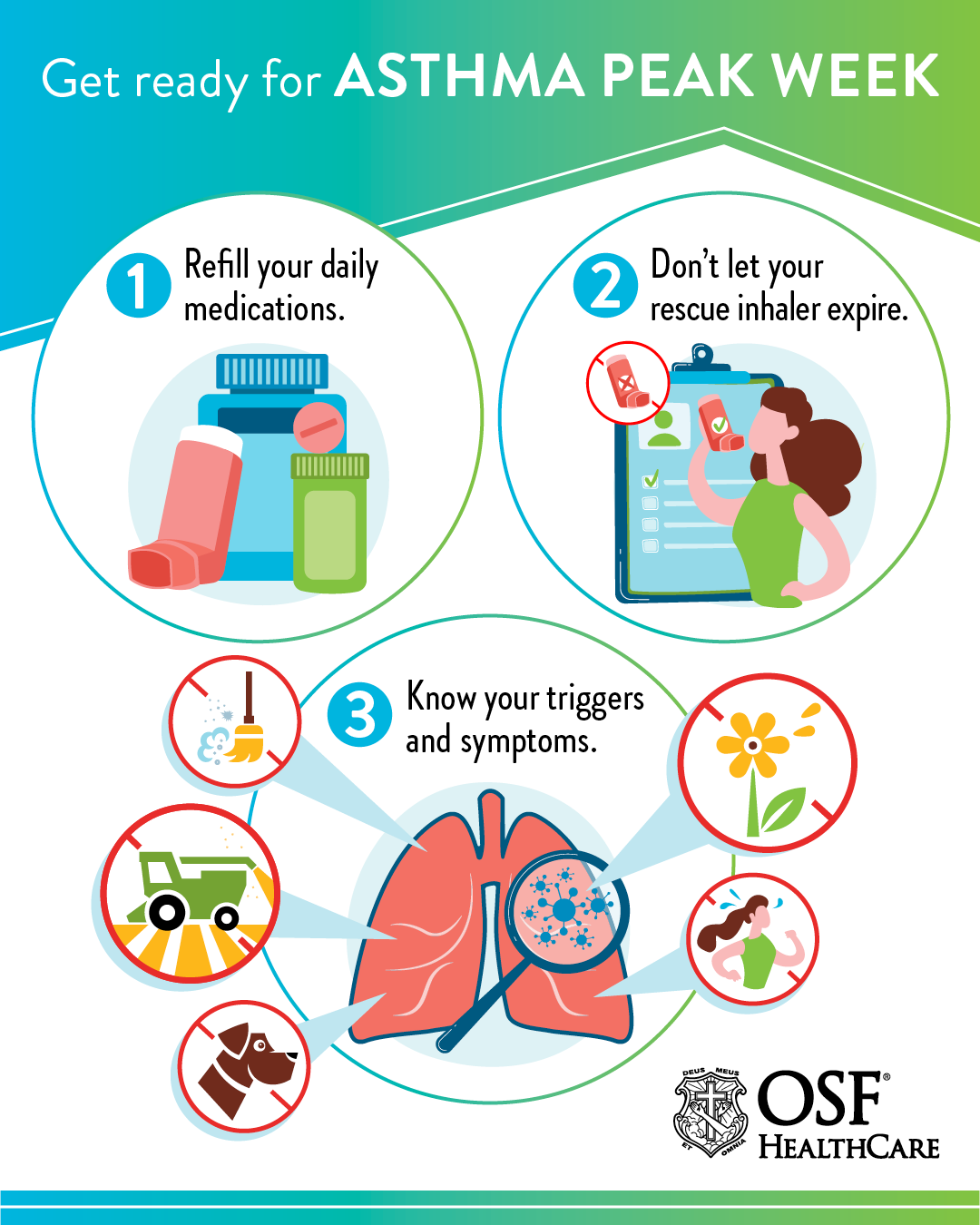
Dr. Whitten says the best thing you can do to prepare for “Peak Week” is to review your plan and take action as necessary:
- Make sure your prescriptions are filled.
- Make sure your rescue inhaler, if you need one, is up to date. Because they are used as needed, it’s easy to hang on to them for too long. Check the expiration date. If it has passed, get your prescription renewed.
- Know your triggers and symptoms. Avoid those things that cause you difficulty. And if you start feeling symptoms, use your rescue inhaler.
Consult your primary care provider if you have questions about your plan. And then follow it.
Asthma and COVID-19
The COVID-19 pandemic raised concerns that asthmatic people might be at higher risk for becoming infected with the novel coronavirus. During the early weeks of the pandemic, asthma was frequently listed among dangerous underlying conditions.
“Underlying respiratory conditions are a concern with COVID,” Dr. Whitten said. “But I don’t think we know for sure if you are more at risk for getting the virus if you have asthma. We do know underlying diseases put you at risk for complications if you get the virus.
“Asthma itself does not necessarily predispose you to get the virus. It should not put you at risk. But it could make your COVID infection worse if you get the virus, and the virus could exacerbate your asthma.”
Factors that contribute to ‘Peak Week’
So, what goes into creating that perfect storm for “Peak Week?”
It’s really a combination of anything and everything that can trigger an asthma attack arriving to party at the same time. Common triggers include dust, pet hair, pollen and exercise. But there are plenty more.
“Ragweed and multiple different species are at their highest incidence right at that time,” Dr. Whitten said. “There’s mold. Another factor could be the crops. Bean dust and corn dust are definite triggers for some asthmatics. All of that overlaps with seasonal weather change. And don’t underestimate the role of our young people. They go back to school, and even if they don’t get sick, they pick up and spread respiratory viruses. Flu season is about to start.
“All of these things come together at the same time.”
If you have asthma, here are some additional steps you can take to protect yourself:
- Make sure you have a quality air filter on your heating and cooling system.
- Take off your shoes indoors so you don’t track mold and pollen through the home.
- Close doors and windows during peak pollen times.
- Wash your hands frequently.
- Avoid sick people.
- Work with your primary care provider to test for your allergic triggers. This can be done with a simple blood test.