
How much sleep do I need?
Sleep often ends up at the bottom of our to-do list. Whether it’s staying up late to finish some work, binge-watching a TV show or scrolling through your phone, it’s easy to sacrifice sleep without realizing how much our bodies and brains need it.
“But here’s the truth: sleep isn’t a luxury – it’s a necessity,” said Frances Young, manager of the Sleep Center at OSF HealthCare Saint Anthony’s Health Center. “Think of it like charging an electric car. You wouldn’t drive it across the country with just a 20% charge, right? Your body operates the same way. If you don’t get enough rest, you won’t get very far.”
The amount of sleep depends on age and lifestyle.
Ask your primary care provider for a referral to a sleep specialist.
Why is sleep important?
Sleep isn’t just downtime. When you sleep, your body works hard to fix itself. It repairs muscles, balances hormones, strengthens your immune system and organizes your memories. That’s why, after a good night’s sleep, you can think more clearly, focus better and handle stress more easily.
Lack of sleep can negatively affect your mood, memory and health. If you don’t get enough sleep over time, it can lead to a greater risk of heart disease, diabetes, weight gain, depression and a weakened immune system.
What are the stages of sleep?
Quality sleep consists of alternating cycles of REM (rapid eye movement) and NREM (non-rapid eye movement) sleep throughout a typical night, repeating approximately every 90 minutes.
The sleep cycle stages are:
- Stage 1 – Core sleep on an Apple™ Watch
- Between being awake and falling asleep
- Light sleep
- Stage 2 – Core sleep on an Apple Watch
- Onset of sleep
- Becoming disengaged from surroundings
- Breathing and heart rate are regular
- Body temperature drops (so sleeping in a cool room is helpful)
- Stages 3 and 4
- Deepest and most restorative sleep
- Blood pressure drops
- Breathing becomes slower
- Muscles are relaxed
- Blood supply to muscles increases
- Tissue growth and repair occur
- Energy is restored
- Hormones are released, such as growth hormones, which are essential for growth and development, including muscle development
- REM (25% of night): First occurs about 90 minutes after falling asleep and recurs about every 90 minutes, getting longer later in the night
- Brain is active, and dreams occur
- Eyes dart back and forth
- Body becomes immobile and relaxed, as muscles are turned off
Additionally, levels of the hormone cortisol, or stress hormone, dip at bedtime and increase throughout the night to promote morning alertness. Any disruption during any of the sleep stages requires your body to restart the process.
So, how much sleep do you need?
Is six, seven or eight hours of sleep enough? The amount of sleep you need depends on your age and, to a small extent, your lifestyle.
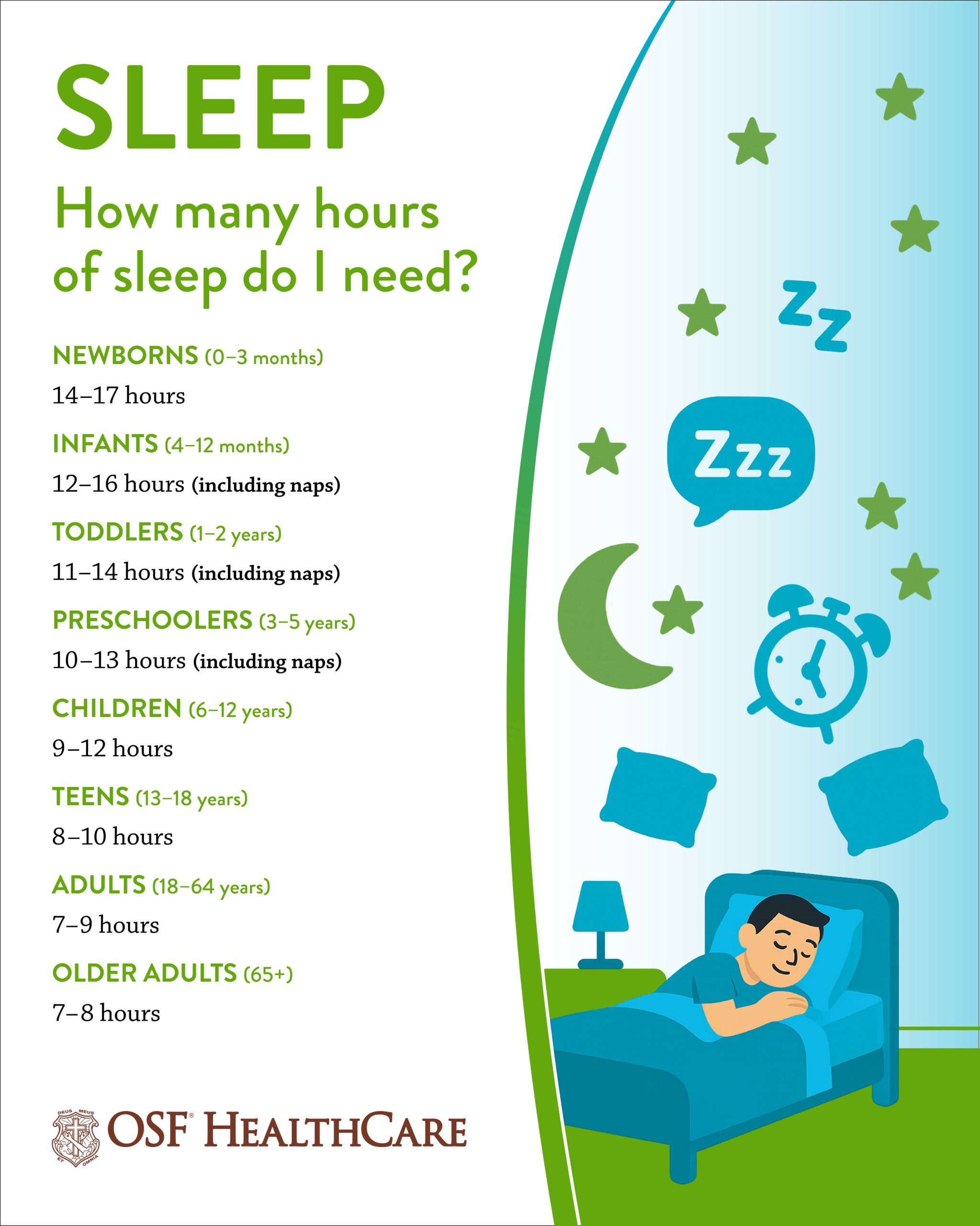
However, these aren’t hard rules. Whether you are female or male, some people can get by on less, some need more. But if sleep is cut short, the body doesn’t have time to complete all the phases needed for muscle repair, memory consolidation and the release of hormones regulating growth and appetite.
“Many of us fall short of these targets, often ending up with six hours of sleep or less. You might manage to ‘get by,’ but you won’t feel your best, and over time, it could take a toll on your health,” Frances said.
How can I get a deeper sleep?
Getting deeper, more restorative sleep is one of the most powerful things you can do for your overall health. To improve deep sleep, it’s important to prioritize a sleep strategy.
“Try to keep a consistent sleep schedule, even on those cozy weekends,” Frances said. “It’s also beneficial to limit blue light exposure from screens for at least an hour before bedtime.”
You should make sure your bedroom is a sanctuary for sleep, keeping a cool, dark and quiet sleep environment without TVs and other electronics.
Limiting caffeine and heavy meals in the evening can make a big difference. Gentle stretching, meditation or reading before bed signals your brain to wind down. Supporting your body with these habits helps you enter deeper sleep cycles, leaving you refreshed in the morning.
When should someone start seeking help?
You should speak to your physician if you notice any symptoms of a sleep disorder that last longer than a week.
- Breathing cessation during sleep
- Excessive tiredness
- Irritability
- Loud snoring
- Morning headaches
- Narcolepsy
- Reduced attention or concentration
- Restless Leg Syndrome
- Sleepwalking
- Teeth grinding
Another indicator – if you regularly require over-the-counter sleep aids or try tricks like mouth taping, you should consult your primary care provider. Our bodies are designed to get natural, quality sleep – medicine should not be required on a consistent basis. It is important to remember – do not drink alcohol and take sleep aid medication at the same time.
How are sleeping disorders diagnosed?
The most common way of diagnosing a sleep disorder is by performing a sleep study.
Typically, a sleep study is done during an overnight stay at a sleep center, but it can also be performed at home in certain circumstances.
Sleep = Self-Care
“Taking your sleep seriously is one of the best things you can do for your body and mind. It’s not about being lazy. It’s about being smart with your health. So tonight, give yourself permission to wind down and rest. Your future self will thank you,” Frances said.
Need help getting your sleep schedule back on track? Ask your primary care provider for a referral to a sleep specialist. They can help you find a routine that works for your life.