Pregnancy After Polyendocrine Metabolic Ovarian Syndrome
After going six months without having a period, Miranda Yazvec needed answers.
“I was having irregular bleeding. I had facial hair growing and I was gaining weight even while dieting. Overall, I didn’t feel good,” the now 26-year-old Lewistown, Illinois, woman said.
Miranda turned to her doctor, who diagnosed her with polyendocrine metabolic ovarian syndrome (PMOS), formerly known as PCOS, a hormonal and metabolic disorder that affects women and girls, beginning at puberty.
Women diagnosed with PMOS typically experience several of the following conditions:
- Irregular, heavy, prolonged or absent periods due to abnormal/unpredictable/etc. ovulation
- High levels of the hormone androgen, which causes excess body or facial hair and acne
- Fluid-filled sacs called cysts on one or both ovaries
- Alopecia or a thinning of hair on the scalp
Miranda experienced many of these symptoms.
Care Journey
NaPro for PMOS or infertility issues
As part of the treatment for PMOS, Miranda’s doctor put her on birth control pills to regulate her periods.
“I didn’t like [being on birth control pills] because I was trying to get pregnant,” Miranda said. Now, she needed to know if pregnancy with PMOS was even possible. So in October 2020, she began seeing Annevay Conlee, MD, an OSF HealthCare family medicine specialist who diagnosed Miranda with PMOS.
“PMOS never actually goes away. It’s just treated,” Miranda said.
She began taking metformin, a medication that reduces your body’s insulin resistance, which can help lower testosterone and estrogen levels, increase fertility and reduce the risk of miscarriage. She also was prescribed progesterone to further support ovulation.
Dr. Conlee referred Miranda to a fertility care practitioner nurse. She was introduced to NaProTECHNOLOGY™, a fertility care-based medical approach to family planning and gynecological health as opposed to fertility-control measures, such as birth control pills. It uses the Creighton Model FertilityCare™ System to monitor various hormonal levels during the menstrual cycle to naturally know when the body is ovulating.
“You can also use it as a form of birth control without taking birth control, which I love,” Miranda said.
A Need for Surgery
In August 2021, Miranda was seeing Ann Church, MD, an OSF HealthCare OB/GYN. She began having severe pain around her ovaries. An ultrasound showed her ovaries had doubled in size in the four months since the previous ultrasound.
“My eggs weren’t releasing. They were hemorrhaging in my ovaries,” she said. “They were nonfunctioning at that point.”
Dr. Church then performed a bilateral wedge resection of the ovaries by surgically opening Miranda’s C-section scar from when she had her first child in 2016. During the procedure, a segment of the ovaries is cut out and the ovaries are repaired. This treatment has proven to be successful in starting ovulation and resulting in pregnancies.
“I got pregnant three months later,” Miranda said.
A Pregnancy Success
She continued taking progesterone throughout the pregnancy up to 36 weeks. She started by taking pill-form medication, but after three weeks, her progesterone level still wasn’t optimal. This required Miranda to take shots every other day.
“It was awful, but I made it to 39 weeks and gave birth to a baby girl,” she said.
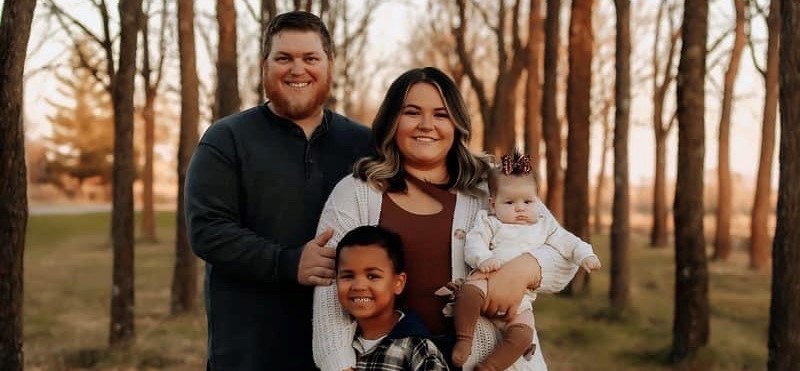
Miranda is a PMOS pregnancy success story that she hopes encourages other women facing the same experience.
A Return to Normal
Today, Miranda’s menstrual cycle has returned to being regular, thanks to her treatment with OSF.
She hopes other women with PMOS or infertility issues explore all their options.
“I feel like other women going through PMOS or primary or secondary infertility … they just want to jump in and do invasive in-vitro fertilization. I hope they see there are other options and more natural options. NaPro was amazing. I didn’t realize my body could tell me so much.”