
How to Take Blood Pressure: Tips for monitoring your blood pressure at home
Understanding how to take blood pressure at home, doesn’t replace going to the doctor, but may give you a more accurate blood pressure reading. Being in a familiar place, where there are often fewer stressors, may provide a reading that better reflects your typical blood pressure levels.
Learning how to to check your blood pressure at home can be helpful – especially if you struggle with high blood pressure, also known as hypertension. According to Melinda Cooling, DNP, the chief nursing and advanced practice provider for OSF HealthCare, this also gives you the opportunity to stay on top of your condition and recognize when it’s time to call your doctor.
“It’s an opportunity for both your primary care provider and you to get a look at how your blood pressure changes throughout the day and what your trends are,” Melinda said. “Trends in your blood pressure are the most critical decision point for a health care provider.”
While monitoring your blood pressure at home helps in tracking your treatment, it also encourages you to have better control over your condition.
“You can gain a stronger sense of responsibility for your health by monitoring your blood pressure at home,” Melinda said. “It could motivate you to properly take any medication you’ve been prescribed, become more physically active and follow a healthier diet.”
Types of monitors
There are two types of blood pressure monitors you can consider for use at home. They are:
Aneroid: These monitors have a cuff that you inflate and a dial gauge to read. While these types of monitors are inexpensive, they can be hard to read properly. They also should be adjusted or calibrated at least once a year.
Digital: Easy to use and read. Most digital monitors can be used with one hand and are sensitive to the movement of the body. These monitors operate on batteries, which can make them a little more expensive. Melinda recommends talking to your provider to determine the best type of monitor for you to track and control your hypertension.
“You should also bring the monitor with you to your provider’s office to compare it with what’s used in the office,” she said. “This will give you a better idea of the accuracy of the reading you get while at home versus in the doctor’s office.”
Choosing the best time to take your blood pressure
It’s helpful to take readings at the same time of day each day – or however often your doctor recommends – and keep those readings in a log.
“You can then share those readings with your doctor and together you can discuss any changes or further explore what you’re doing in terms of your lifestyle that may be resulting in inconsistent readings,” Melinda said. “If you have high readings for a couple days in a row, it’s very important to contact your doctor immediately.”
Understanding normal blood pressure by age
Blood pressure can naturally change as you age, so what is considered “normal” blood pressure may look different for each individual. As you get older, monitoring blood pressure becomes an important part of maintaining overall health. Programs such as OSF CompleteCare 55+ support older adults by providing coordinated care and assistance with managing ongoing health conditions, including hypertension. By working closely with your care team and using digital monitoring tools, you can track changes in your blood pressure better and make more informed decisions about your health.
Tips for buying a monitor
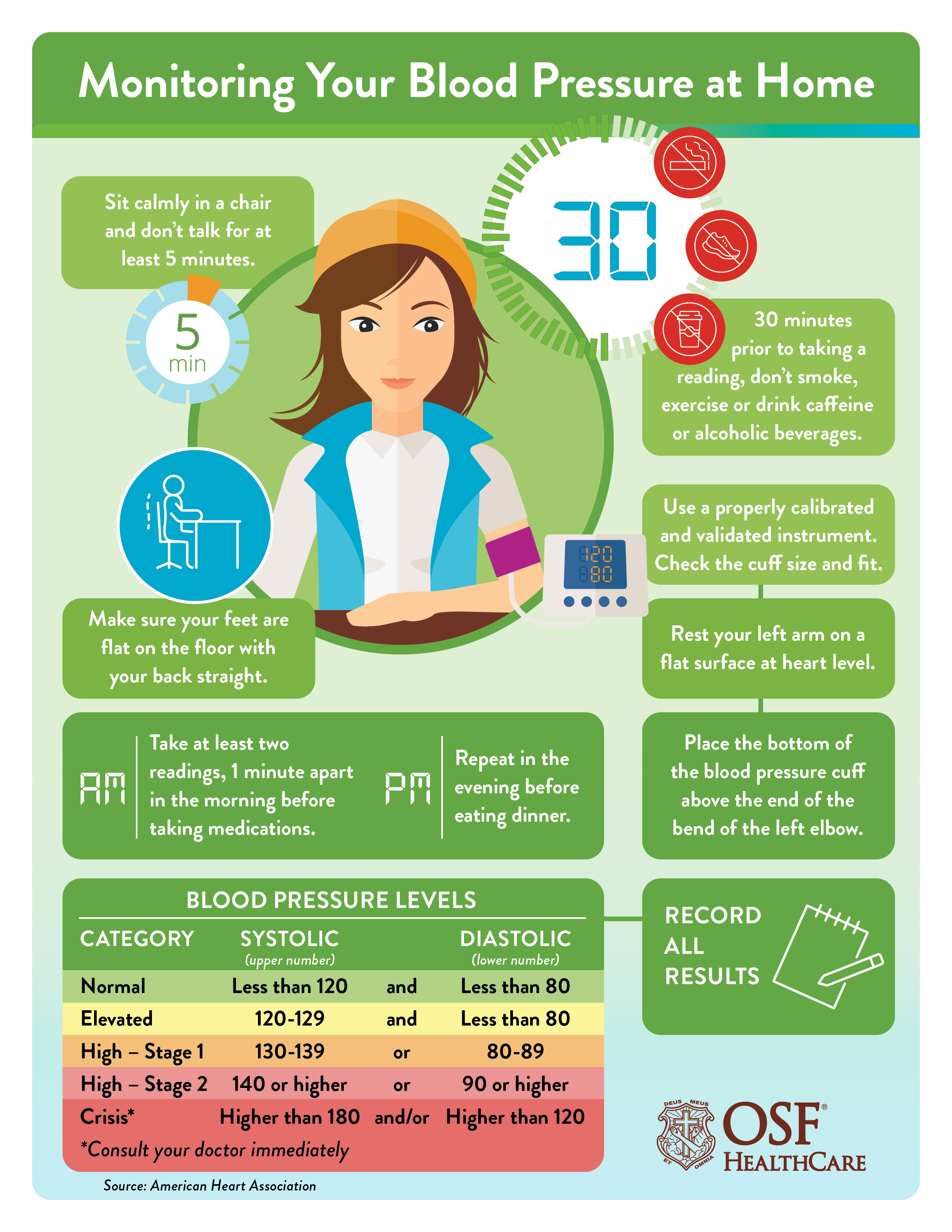
The American Heart Association (AHA) recommends using an automatic monitor with a cuff that goes on your upper arm (bicep).
Other things to consider:
- The AHA doesn’t recommend wrist and finger monitors because the results aren’t as reliable as the upper arm monitors.
- Make sure the monitor meets the Blood Pressure Validated Device Listing (VDL)
- The monitor should be approved for use on children, pregnant women and older adults, depending on who will be using it.
- Make sure the cuff is the correct size. People with smaller or larger arms may need a special cuff.
- Check your monitor’s reading when the device is new by comparing its reading to the one used at your doctor’s office.
- Check your monitor once a year as they can wear out over time.