Why does my back hurt?
Your back does a lot of work you probably don’t think about. Until it starts to hurt.
Back pain is very common, but figuring out what’s causing it isn’t always straightforward. The location and type of pain can offer helpful clues, but they don’t tell the whole story. Understanding the possible causes and knowing which symptoms to take seriously can help you decide how to treat it, or when you need to talk to your doctor.
Have pain in your back?
Where does your back hurt?
The location of your back pain can offer clues about what’s causing it.
Upper Back and Shoulder Blade Pain
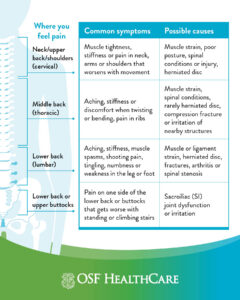
Pain around your shoulder blades, also called scapula pain, may feel like an ache, tightness or sharp discomfort. It can stem from muscles, joints or the cervical spine in your neck area, with pain sometimes radiating into the upper back or shoulder blades. In some cases, pain in this area may also be referred from the chest or abdomen.
Middle Back Pain
Your middle back, or thoracic region, runs from your shoulders to the bottom of your rib cage. Pain here may affect your muscles, joints, vertebrae, which are the bones in your spine, or discs – the padding between your vertebrae.
Lower Back Pain
Your lower back, or lumbar region, supports much of your body’s movement and weight. Lower back pain is common and may involve muscles, joints, discs or nerves.
Sacroiliac Joint Pain
The sacroiliac (SI) joints connect the base of your spine to your pelvis. They’re located on either side of your sacrum, which is the area in the middle of your back just above your buttocks.
SI joint pain is often felt in the lower back or buttocks, sometimes more on one side than the other. It can feel similar to other types of lower back pain, so you may need to schedule an examination with your doctor to identify the source.
 What are the different types of back pain?
Back pain doesn’t look or feel the same for everyone. Paying attention to how long it lasts and the symptoms that come with it can help you better understand what you’re experiencing.
Acute Back Pain
Acute back pain typically occurs after an injury or due to an underlying problem. It is normally short-term pain that lasts anywhere from a few days to a few weeks and often improves as the underlying condition heals.
Chronic Back Pain
Chronic back pain generally lasts longer than three months. It may involve several contributing factors and deserves individualized evaluation, particularly when it affects your daily life.
Muscular or Mechanical Back Pain
This type of pain involves the muscles, ligaments or joints that support your back. It may affect a specific area, such as your lower back, or feel more widespread across your back. You may notice soreness, tightness or stiffness that changes with movement or certain positions.
Nerve-Related Back Pain
When a nerve in your spine is irritated or compressed, pain may travel from your back into your buttocks, legs or feet. Tingling, numbness or weakness may occur, too. Sciatica is one example (link to new blog) of a condition involving nerve-related symptoms.
What are the most common causes of back pain?
Back pain has many possible causes. Some involve the muscles and joints, while others affect the discs, nerves or bones of the spine. In some cases, more than one factor contributes to the discomfort.
Muscle Strain and Overuse
Your back muscles work hard to support your body throughout the day. Like any muscle, they can become strained or overworked.
Lifting a heavy object, twisting suddenly, trying a new workout or repeating the same movement can leave your back feeling sore and stiff. Even spending hours in one position, like sitting at a desk, may contribute to discomfort.
Muscle-related back pain often feels achy, tight or tender, and may get worse with certain movements. The good news is that many minor strains improve with time and appropriate self-care.
Disc Problems and Discogenic Back Pain
The discs in your back help absorb impact and allow your spine to bend and move. When a disc becomes a source of pain, the discomfort is sometimes called discogenic back pain.
Disc-related pain can develop when a disc undergoes changes or becomes damaged. A herniated disc is a specific problem in which some of the disc’s inner material pushes through its outer layer. Depending on its location, a herniated disc may cause back pain on its own or irritate a nearby nerve.
When a nerve is affected, pain may travel into your buttocks, arms or legs, and may be accompanied by tingling, numbness or weakness. However, not every herniated disc causes symptoms, and finding a disc abnormality on imaging doesn’t automatically mean it’s responsible for your pain.
Vertebrae, Joints and Other Spinal Conditions
Sometimes, the source of vertebrae pain or other spinal pain involves the bones, joints or spaces within your spine rather than the surrounding muscles.
Several conditions can contribute:
- Degenerative changes: The discs and joints in your spine naturally change over time. These changes don’t always cause pain, but they can contribute to symptoms in some people.
- Arthritis: Wear and inflammation in spinal joints can cause stiffness and discomfort, sometimes making movement more difficult.
- Fractures: A broken vertebra can cause significant back pain. Fractures may occur after a major injury or, in people with weakened bones, after a relatively minor fall or movement.
- Spinal stenosis: This condition occurs when spaces within the spine narrow, potentially putting pressure on nerves. Symptoms may include back or leg pain, numbness, tingling or weakness.
Other Causes of Back Pain
Poor Posture
Spending hours in one position can leave your back feeling stiff or uncomfortable. Sitting at a desk, looking down at a phone or standing for long periods may contribute to discomfort, especially when you rarely change positions.
There’s no single perfect posture, so moving regularly and finding comfortable positions throughout the day can help reduce stiffness.
Changes in Activity
Your back needs to adapt to the activities you ask it to do. A sudden increase in exercise, a busy weekend of physical work or returning to activity after a long break may leave you feeling sore. Gradually increasing activity and allowing time for recovery can help your body adjust.
Stress
Stress can affect your body as well as your mind. When you’re under pressure, your muscles may stay tense, and your nervous system may become more sensitive to pain.
This can contribute to back discomfort or make existing pain harder to manage. However, stress shouldn’t automatically be considered the cause of unexplained or persistent back pain. Talk with your doctor if you suspect stress may be contributing to your back pain.
Sleep
Sleep and pain can affect each other. An uncomfortable sleeping position, unsupportive mattress or certain health conditions can all leave you feeling stiff in the morning, while ongoing back pain can make it harder to get restful sleep.
Poor sleep may also make pain more difficult to manage during the day. If back pain regularly interrupts your sleep, consider discussing it with a health care professional.
Inactivity
Your back relies on muscles that support your spine and help you move. When you’re less active, you have less strength and endurance, which can make everyday activities feel more demanding.
Staying active can help support your back. If movement makes your pain significantly worse, or you’re unsure which activities are appropriate, ask your primary care provider for guidance.
Obesity
Carrying excess body weight can place additional stress on your spine and the muscles and joints that support it. Over time, this added strain may contribute to back pain. Maintaining a weight that’s healthy for you can help reduce stress on your back and support your overall spine health.
Kidney Pain
Kidney stones and other kidney conditions can cause back pain. Kidney pain is often felt in your side or flank, along your back just below your ribs. Unlike typical muscle-related pain, it may not change as much when you bend, move or change positions, but putting pressure on the kidneys can be painful if you have a kidney stone.
Urinary Tract Infections
A urinary tract infection (UTI) can cause burning or pain when you urinate, frequent urges to urinate or discomfort in your lower abdomen.
If a UTI spreads to your kidneys, symptoms may include pain in your side or back, fever, chills, nausea or vomiting. A kidney infection needs prompt medical attention because it can become serious if left untreated.
Digestive Problems
Your digestive system and your back may seem like unrelated parts of your body, but discomfort in your abdomen can sometimes make your back hurt, too. Certain digestive conditions may contribute to this pattern, although back pain can also occur alongside digestive symptoms for unrelated reasons.
- Constipation: When stool builds up in your bowel, it can cause bloating, abdominal discomfort and pressure that you may feel in your back. If you have constipation and your back pain continues after it improves, consider other possible causes.
- Irritable bowel syndrome (IBS): IBS can cause abdominal pain, bloating and changes in bowel habits, including constipation or diarrhea. Back pain may occur alongside these symptoms, but it isn’t specific to IBS and shouldn’t automatically be attributed to it.
- Diarrhea and lower back pain: These symptoms can happen together for several reasons, including a digestive illness, dehydration or a separate muscle-related back problem. The combination alone doesn’t identify the cause.
Appendicitis
Appendicitis happens when the appendix becomes inflamed. It most often causes abdominal pain that may begin near the belly button and move toward the lower right side of the abdomen. However, the location and pattern of pain can vary, and some people may experience discomfort in their back or left side.
Car Accident or Injury
Adrenaline and the stress of a collision can make it harder to recognize pain following an accident. As the initial shock wears off, you may notice more soreness and stiffness.
Back pain after a car crash can result from muscle or ligament strain, but a collision can also injure the spine or other structures. The seriousness of an injury isn’t always obvious from how you feel immediately afterward.
If you’ve been in a collision, seek medical evaluation even if your symptoms seem manageable at first. Don’t wait for the pain to become severe, especially if you have neck or back pain after a high-impact crash.
Causes of Back Pain in Women
Hormonal changes, menstrual cramps, pregnancy and certain pelvic conditions can all contribute to back pain in women.
Can an ovarian cyst cause back pain?
Ovarian cysts are fluid-filled sacs that develop on or in an ovary. Many are harmless and cause no symptoms, but some can lead to pelvic discomfort, pressure or pain that extends into the lower back.
Your back pain could indicate an ovarian cyst if you’re also experiencing pelvic pain, abdominal fullness or changes in your usual period symptoms. These signs aren’t enough to confirm an ovarian cyst, so you’ll need to contact your provider.
Why does my lower back hurt during my period?
If your lower back starts aching around the same time as your period, menstrual cramps may be the reason. During menstruation, the uterus contracts to help shed its lining. The resulting pain can extend beyond the lower abdomen and radiate into the lower back or thighs.
Menstrual cramps can also contribute to tension in the pelvic muscles and discomfort around the SI joints, which connect your spine to your pelvis. This type of menstrual low back pain may feel like a dull ache or cramping discomfort and often occurs alongside other period symptoms.
Endometriosis can cause more significant menstrual and pelvic pain, sometimes with lower back discomfort.
Back Pain During Pregnancy or After an Epidural
Pregnancy changes how your body carries weight and moves. As your abdomen grows, your posture and the demands on your back change, which can contribute to muscle strain and lower back discomfort. Hormonal changes and increased stress on the pelvis can also play a role.
Back pain can continue after childbirth as your body recovers and you adjust to caring for your baby. Some people also notice soreness near the site of an epidural, a type of anesthesia given through a needle in your back during labor and delivery.
Back pain after an epidural can have several causes. Temporary tenderness at the injection site may occur, but persistent, worsening or unusual pain should be discussed with a health care professional rather than automatically attributed to the procedure.
Diagnosing the Cause of Your Back Pain
Back pain can have many possible causes, and the symptoms don’t always point to one clear answer. Your provider will likely begin with questions about your pain and how it affects your daily life, including:
• Where does it hurt? Is the pain in your upper, middle or lower back? Does it spread into your buttocks, legs or another area?
• When did it start? Did it appear suddenly, follow an injury or develop gradually?
• What does it feel like? Is it sharp, dull, aching, burning or shooting?
• What makes it better or worse? Does it change when you bend, walk, sit, rest or change positions?
• What else is going on? Have you noticed fever, urinary changes, abdominal symptoms, tingling, numbness or weakness?
• What is your medical history? Have you had previous back injuries, similar episodes of pain, recent changes in activity or other health conditions?
Your clinician may also examine your back, assess your movement and check your strength, sensation and reflexes, depending on your symptoms.
You may not need additional testing. If your history or examination suggests a specific condition, your clinician may recommend blood or urine tests, imaging or other evaluations. An MRI can provide detailed images of the soft tissues and structures in your spine, including discs, nerves and the spinal canal. It can be useful when a health care professional needs to investigate a possible spinal condition.
Back Pain Relief
The best way to find back pain relief depends on what’s causing your symptoms, how long you’ve had them and how much they’re affecting your daily life. Many people improve with simple self-care and nonsurgical treatments, while others may need medication, specialized care or surgery.
Medical Treatment Options to Relieve Back Pain
Physical Therapy
Physical therapy can help improve mobility, build strength and teach you ways to move that support your recovery. Other approaches, such as massage or acupuncture, may help some people manage pain.
Medications
Medications can help manage pain or inflammation in your back. Depending on the diagnosis, treatment could include over-the-counter pain relievers, prescription medications or injections for certain conditions involving the spine or nerves.
Surgery
Most episodes of back pain don’t require a surgical procedure. However, spinal surgery may be an option for certain conditions when symptoms and imaging indicate that surgery could help and when conservative management fails.
The right choice depends on the diagnosis, your overall health, the severity of your symptoms and the potential benefits and risks of treatment. A spine specialist can help you understand your options and whether surgery is appropriate for your situation.
If surgery is recommended, ask your care team whether a minimally invasive approach may be appropriate for your condition.
How to Relieve Back Pain at Home
Most back pain doesn’t disappear overnight, but a few simple steps can help ease discomfort while your body recovers.
- Try heat or ice. A heating pad may help relieve stiffness and muscle tension, while a cold pack may help ease pain after an injury. Wrap heat or cold sources in a towel to protect your skin.
- Keep moving gently. It may be tempting to stay in bed, but prolonged bed rest can make stiffness worse. Short walks and gentle movement may help you stay mobile. Avoid activities that significantly increase your pain.
- Adjust your routine. Take breaks from prolonged sitting or standing, change positions regularly and temporarily modify activities that aggravate your symptoms.
- Find a comfortable sleeping position. Try placing a pillow between your knees when sleeping on your side or beneath your knees when lying on your back to see whether it helps you get comfortable.
Remember, the best approach depends on what’s causing your back pain. If your symptoms are severe, getting worse or not improving, contact your provider.
Know the Red Flags of Back Pain
Back pain can sometimes improve on its own, but knowing when and where to seek help can make a difference.
Seek emergency care or call 9-1-1 if back pain comes with new loss of bladder or bowel control, numbness around your groin or buttocks, or significant new weakness in your limbs. Severe pain after a major accident, chest pain or difficulty breathing also warrants emergency evaluation.
Schedule an appointment with your provider if your back pain:
- Lasts longer than four weeks
- Keeps coming back
- Gets worse
- Has no clear explanation
- Interferes with sleep, work or everyday activities
- Isn’t improving with home remedies
- Is accompanied by other symptoms including fever, unexplained weight loss or new numbness or tingling