
How to Know if You Have a Brain Tumor
The internet can make anything sound scary. Headaches, dizziness or even smelling things that aren’t there could be nothing. Or could it all really be a brain tumor? Most of the time, these symptoms have far more common, less serious causes, but it’s helpful to know what to watch for.
Andrew Tsung, MD, vice president, OSF HealthCare Illinois Neurological Institute, cuts through the noise and addresses the most common brain tumor myths and warning signs so you can separate fact from fiction.
“Brain tumors are very rare, and most of the symptoms people worry about are extremely unlikely to indicate a tumor,” said Dr. Tsung. “And even when a tumor is present, many are benign, meaning they aren’t cancerous and can often be treated successfully. Malignant, or cancerous, tumors are even less common.”
Understanding what’s common and what’s worth a closer look can help you feel more confident about when to check in with your doctor.
Talk to a doctor about your symptoms
Do brain tumors cause headaches?
Yes, brain tumors can cause headaches. However, headaches are very common, and there are many more likely reasons for them including stress, dehydration, tension or even just a long day at the computer. Knowing what’s typical for your body can help you decide when to check in with a doctor.
What a normal headache feels like
Tension headaches are the most common type of headache and usually feel like a tight band around your forehead or the back of your head and neck. The pain is steady, mild to moderate and often improves with rest, hydration or over-the-counter pain medicine.
Migraines are more intense, often pounding or throbbing, usually on one side of your head. They can come with nausea, sensitivity to light or sound or visual “auras” like flashing lights. Migraines can last hours or even a few days, but they usually follow a pattern you recognize if you get them regularly.
How a brain tumor headache might feel
Headaches caused by a tumor are much less common, but there are a few differences that can help you spot them:
- They may be persistent and slowly get worse over time
- They often feel different from your usual headaches, more intense or in a new location
- Some people notice the headache is strongest in the morning, or it worsens when coughing, sneezing or bending over
- Initially, a brain tumor headache might come and go, but they often become more consistent over time
Can a brain tumor cause dizziness or vertigo?
Feeling dizzy or off-balance can be unsettling, but most of the time, these symptoms can be explained by other issues such as inner ear problems, dehydration, low blood pressure or medications. That said, tumors in certain parts of the brain can affect your sense of equilibrium.
If your dizziness is persistent, getting worse or accompanied by other unusual symptoms, it’s a good idea to check in with your doctor.
“Dizziness alone is usually not a sign of a brain tumor,” said Dr. Tsung, “but if it feels unusual for you, especially with other neurological changes, it’s worth an evaluation.”
Can a brain tumor cause seizures?
Yes. Seizures can sometimes be the first noticeable sign of a brain tumor, especially if they appear suddenly in someone who’s never had them before. If this happens, it’s important to get medical attention right away.
Are phantom smells a symptom of a brain tumor?
Sometimes people notice smells that aren’t really there, like smoke or burnt toast. These “phantom smells” can, in very rare cases, be linked to seizures or certain brain tumors. Most of the time, though, they happen because of far more common issues that impact the part of your brain that processes smell, like migraines, sinus infections or even colds.
If you notice new or persistent unexplained smells along with other symptoms like headaches, dizziness or seizures, it’s a good idea to check in with your doctor to rule out anything serious.
Can blepharospasm be a sign of a brain tumor?
Blepharospasm is an involuntary twitching or blinking of the eyelids. Occasional eye twitches are common and usually harmless, often triggered by tiredness, eye strain or stress. In very rare cases, it can be linked to brain conditions.
Can a brain tumor cause memory loss?
Some brain tumors can affect memory if they’re in areas that control cognitive function. But minor memory lapses are far more commonly caused by stress, sleep issues, medications or normal aging.
Can a brain tumor cause hallucinations?
Hallucinations are seeing or hearing things that aren’t there. If someone is having seizures, it can be common for them to also develop hallucinations. But independently, they are an extremely rare symptom of brain tumors, and are much more often caused by migraines, sleep deprivation, certain medications, other neurological conditions or mental health disorders.
Can a brain tumor cause extreme personality or behavior changes?
Significant changes in personality or behavior can happen if a tumor affects specific parts of the brain. Still, these changes are much more often related to stress, depression or other mental health conditions.
Can a brain tumor cause high blood pressure?
High blood pressure, very rarely, can be caused by brain tumors located in a specific area. More often, it’s linked to lifestyle, kidney issues or genetics.
Can a brain tumor cause neck pain?
Some brain tumors can cause pain to radiate down the neck. In general, neck pain is very common for many other reasons, including muscle strain, posture or arthritis, and is only rarely connected to a brain tumor.
Does a brain tumor cause nosebleeds?
Nosebleeds are usually caused by dry air, allergies or minor trauma to the nose or sinuses. Brain tumors causing nosebleeds are extremely rare.
Can a brain tumor cause weight gain or weight loss?
Significant, unexplained changes in weight are usually linked to diet, metabolism or other medical conditions, not brain tumors. However, weight loss can be a symptom of anyone who has cancer. Certain tumors in the pituitary gland can upset your hormones and cause weight gain.
Do brain tumors cause hair loss?
Hair loss is generally caused by stress, genetics or medications. It’s not considered a direct symptom of brain tumors. However, the treatment for brain tumors can cause hair loss, including chemotherapy and radiation.
Can a brain tumor cause anxiety or depression?
Mood changes can happen with brain tumors, but anxiety and depression are far more commonly caused by life stressors, hormonal changes or mental health conditions.
Can a brain tumor cause insomnia?
Trouble sleeping is usually linked to stress, lifestyle habits or other medical issues. Brain tumors causing insomnia are very rare.
Can a brain tumor cause ringing in the ears?
Ringing in the ears, or tinnitus, can be caused by a brain tumor. However, it’s most often caused by earwax, hearing loss or exposure to loud noises.
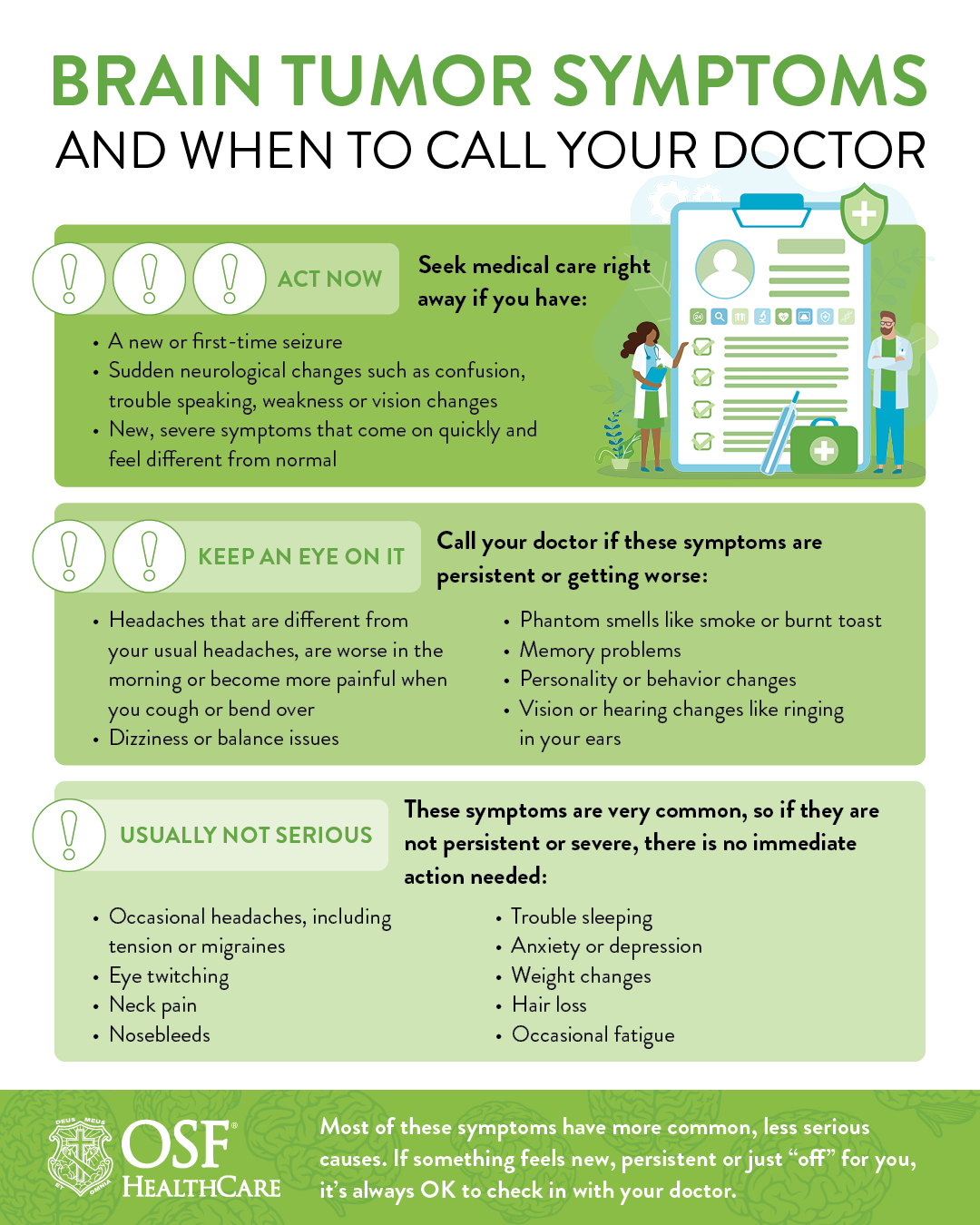
What to Do If You Think You Might Have a Brain Tumor
The reality is, there’s no simple self-check for brain tumors. If a brain tumor is suspected, the only way to know for sure is through imaging, like an MRI or CT scan. These help doctors see what’s really going on.
So how do you know when to make the call?
“Red flags like new seizures, sudden neurological changes or persistent, unusual symptoms should prompt a call to your doctor,” said Dr. Tsung. “Outside of that, keeping up with routine check-ins can give you peace of mind and help catch anything early.”
The key is staying informed without panicking. Track your symptoms, avoid self-diagnosis and don’t hesitate to reach out to your health care provider if something feels off.
“Knowing what’s normal for you and checking in when things change is the best way to take care of your brain health,” said Dr. Tsung.